
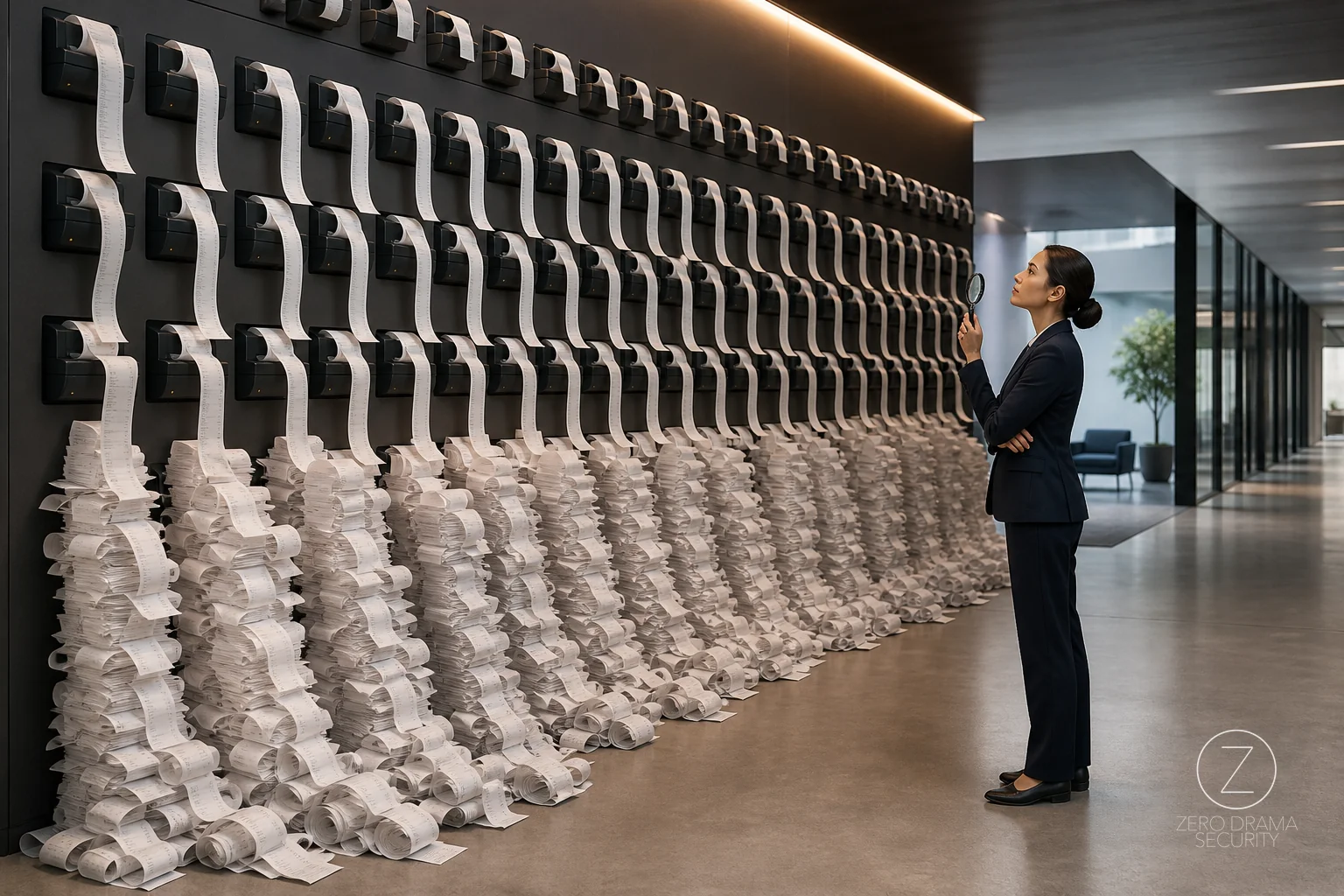
An activity feed looks like product polish.
A customer admin opens the workspace timeline and sees that someone changed a setting. A support agent checks the account history before replying to a ticket. A compliance lead exports recent activity during a review. A product manager calls it transparency. Engineering calls it event plumbing. Everyone moves on.
That is how activity feeds become security evidence without anyone designing them as evidence.
The feed starts as UX. Then it becomes the place people look when access changes, records move, approvals happen, integrations fire, exports run, users join, users leave, policies change, and sensitive workflows get touched. At that point, the feed is no longer decoration. It is part of the control story.
If it is wrong, incomplete, overexposed, or easy to misunderstand, the product has not merely shipped a weak timeline. It has shipped weak evidence.
Decide what the feed is allowed to prove
The first mistake is treating an activity feed as a general purpose history box.
That sounds flexible. It also dodges the hard question: what is this feed supposed to prove?
A customer visible activity feed may need to prove that a workspace admin changed a policy. An internal support feed may need to prove that a support user viewed or modified a customer record. A security investigation feed may need to prove that a privileged workflow executed with the right authority. Those are related, but they are not the same requirement.
If the feed is meant to support security review, then event quality matters. You need actor identity, action, target, source of authority, timestamp, tenant context, and meaningful before and after state where appropriate. If the feed is meant to support customer transparency, you may need fewer technical details and stronger privacy controls. If the feed is meant to support support operations, you need enough context to help without turning every support agent into a casual reader of sensitive history.
One feed rarely serves all three audiences cleanly.
That does not mean building three separate systems by default. It means designing separate views, detail levels, and access rules instead of pretending one timeline can satisfy every purpose.
The audience model is the control
Activity feeds often leak through politeness.
Nobody intended to disclose sensitive context. The event name was just too helpful. The target label included a customer name. The integration event mentioned a destination. The approval event revealed an internal reviewer. The workflow event showed that a user was placed into a restricted group. The export event included the report name, and the report name contained the thing everyone was trying not to expose.
That is not a logging bug. It is an audience design failure.
A customer admin, an ordinary end user, a support agent, a billing analyst, and a security engineer should not automatically see the same event detail. Even when they can see that something happened, they may not need to see every field attached to it.
The product decision is not just whether an event appears. It is what version of the event appears to which audience.
That is the same lesson behind treating audit logs as product features, not compliance exhaust. Evidence is only useful when it is designed around the decisions people actually need to make. Dumping raw events into a pretty timeline is not design. It is formatting.
Completeness beats vibes
A feed that shows easy events but skips uncomfortable ones creates false confidence.
Many products happily show login events, profile edits, comments, task updates, and role changes. Fewer show failed privileged actions, denied access attempts, background job executions, API initiated changes, integration writes, impersonation sessions, export attempts, retention changes, or policy toggles.
That gap matters.
If the feed only captures human clicks in the main web app, it may miss the actions that carry the most authority. API clients, workers, integrations, migration scripts, admin consoles, customer support tools, and scheduled jobs can all change production state. A clean activity feed that ignores those paths is not transparent. It is selective.
The operating question is simple: can the same business action reach production through more than one path?
If yes, the feed design needs to cover the action, not just the UI button.
This is where product teams often discover that the activity feed depends on event discipline they never formalized. Who owns the event taxonomy? Who decides which actions are feed worthy? Who reviews new privileged actions before release? Who checks that API actions and background jobs emit comparable evidence?
Without ownership, the feed becomes folklore. Some teams emit useful events. Some emit noisy ones. Some forget. Nobody notices until a customer asks what happened.
Integrity is not optional
Activity feeds are sometimes treated as a convenient read model: pull recent events from application tables, display them in order, let users filter a little, done.
That may be fine for low stakes collaboration history. It is not enough when the feed becomes evidence for access changes, security reviews, customer disputes, or incident investigation.
Evidence needs integrity properties. Not theatrical ones. Practical ones.
Events should be written in a way that normal users and support staff cannot casually rewrite. Event schemas should be stable enough that old records still mean something. Time sources should be consistent. Actor identity should distinguish between a human, service account, integration, support impersonation session, system worker, or automated policy. Redaction rules should be deliberate, not accidental string cleanup after the fact.
Retention also needs a decision. Keeping everything forever is not maturity. Deleting evidence too quickly is not privacy. The right answer depends on the action, audience, regulatory context, customer commitments, and operational need.
Privacy teams should care about activity feeds because they can become compact biographies of work: who accessed what, when, from where, through which workflow, and in relation to which customer or employee. Security teams should care because these feeds are often the first place people look during messy questions. Product teams should care because customers notice when transparency feels partial or slippery.
A practical review pass
You do not need a six month program to improve this. Start with the feeds people already rely on.
Pick one customer visible activity feed and ask:
- What decisions do users make from this feed?
- Which actions are missing because they happen through APIs, workers, integrations, or support tools?
- Which event fields reveal more than this audience needs?
- Can viewers distinguish human action from automated action?
- Does the feed show denied or failed sensitive actions when those attempts matter?
- Who owns the event taxonomy and approves new event types?
- How long is the evidence retained, and why?
- Can privileged users alter, suppress, or backfill events without separate evidence?
The uncomfortable part is usually not technical. It is governance. Someone has to say which events count, which audiences deserve which details, and which evidence must survive product convenience.
If that decision is left to whoever happens to implement the next timeline card, the activity feed will keep looking useful while quietly avoiding the work of being trustworthy.
Teams that want help turning product evidence, access decisions, and governance reality into workable operating controls can start with Zero Drama Security services.
An activity feed is not automatically an audit log. It is not automatically a privacy problem either. It is a product surface carrying evidence.
Treat it that way before customers, auditors, support, and security all discover they were reading different stories from the same timeline.